Banna Tribe
Key Afer area, near the Kenyan border
About Banna Tribe
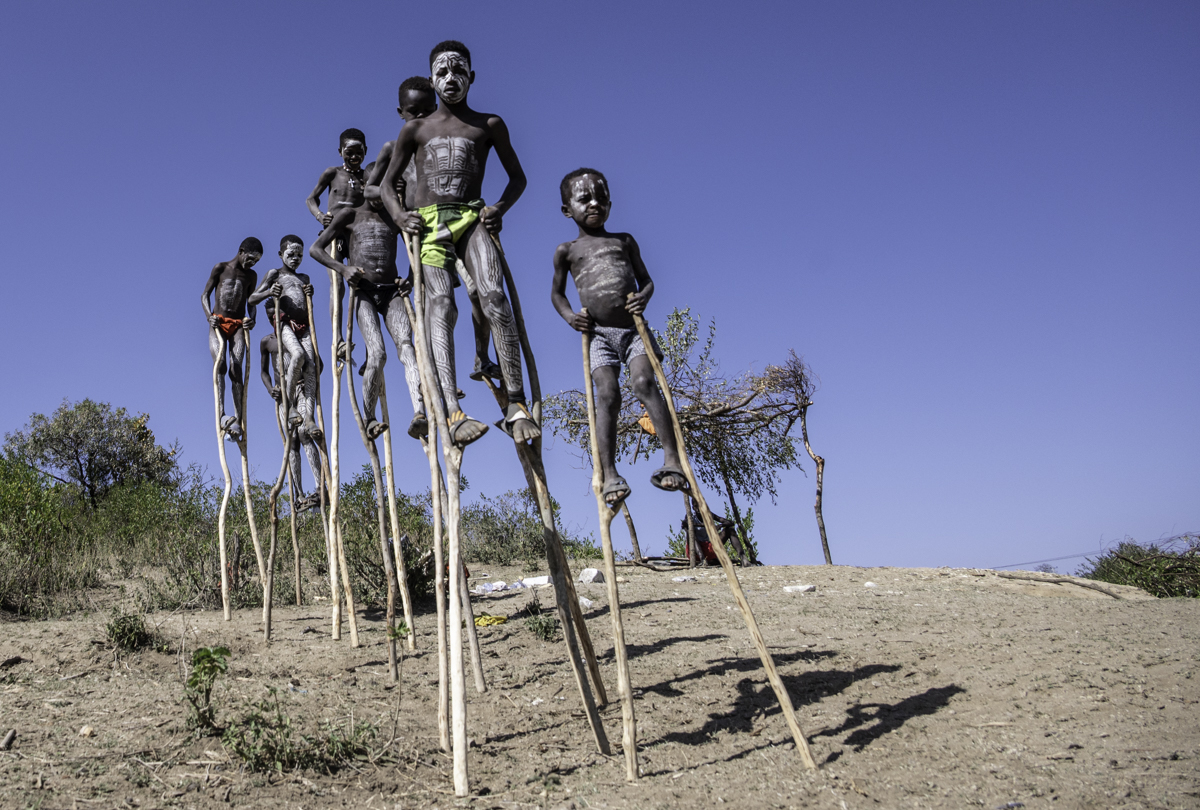
The Banna are a semi-nomadic pastoral tribe of around 10,000 people living near the Kenyan border. Their history is closely linked to the Hamer tribe, resulting in similar language and cultural practices. Their livelihoods centre on breeding cattle, sheep, and goats, and during the dry season they collect and sell wild honey at local tribal markets.
Banna villages are arranged in a circle, with family huts built around a central area where cattle are kept. The huts are constructed from flexible poles folded inward to form a dome shape, covered with straw and cloth mats.
Like the Hamer and Karo, the bull-jumping ceremony is one of the most important rites of passage — marking a boy’s transition into manhood and granting him the right to marry and own cattle. The Banna also perform rituals rooted in their traditional animist religion, in which natural objects such as trees and rocks are believed to be inhabited by spirits.
Banna men colour and fix their hair with clay, adorning it with feathers, flowers, and beads. Girls wear short, uncoloured hair until marriage, after which they braid and colour it with red clay.
Key Experiences
- Attend bull-jumping ceremonies (seasonal)
- Visit the colourful Key Afer Thursday market
- See elaborate clay hair styling traditions
- Learn about Banna animist spiritual practices
- Experience village life in dome-shaped huts
Cultural Note
The Key Afer Thursday market is one of the best places to meet the Banna alongside Tsemay and Ari peoples. The Banna share many traditions with the Hamer, so combining visits is recommended.