
Nyangatom Tribe
Omo River banks and Kibish Basin, southern Ethiopia
About Nyangatom Tribe
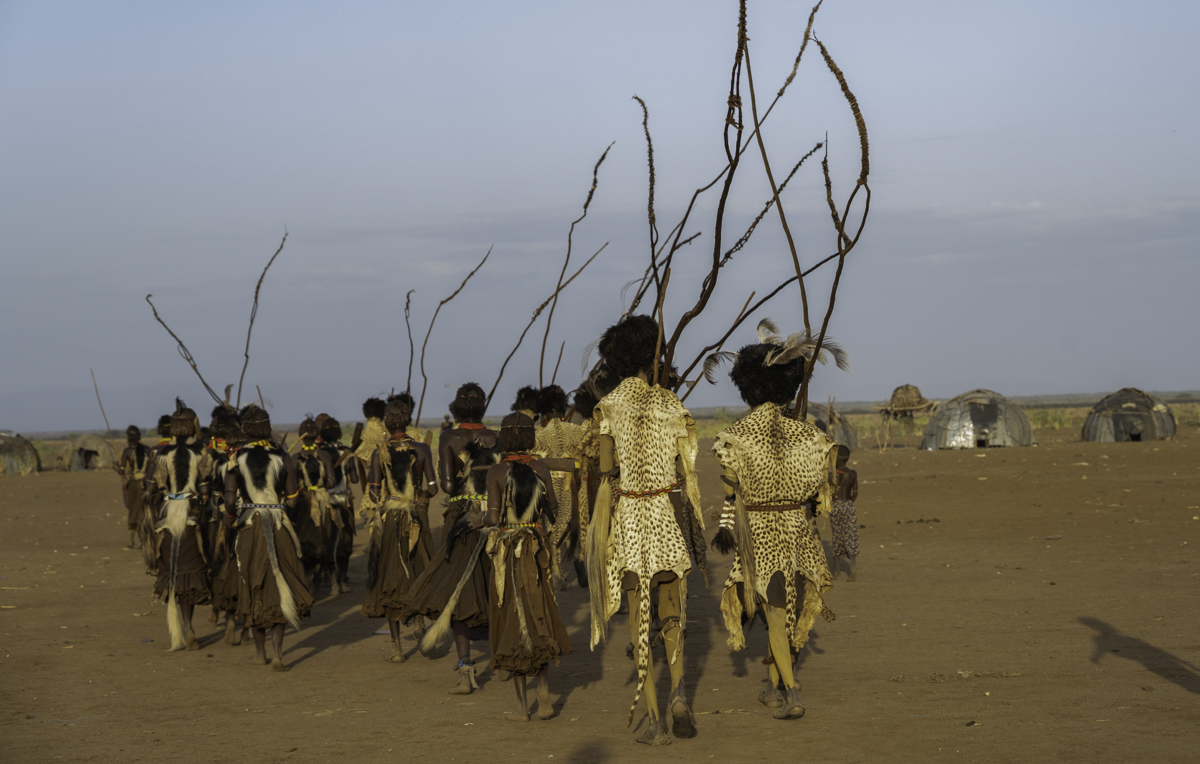
The Nyangatom (also known as Bume) number roughly 7,000 and are divided into two distinct groups: the eastern group near the banks of the Omo River who have developed agricultural systems and permanent settlements, and the western group near the Kibish Basin who focus mainly on herding with some cultivation.
Both groups are related to the Topossa people of Sudan, and their proximity to the Sudanese border has made it relatively easy for the Nyangatom to acquire firearms, which serve as status symbols and play a role in conflicts with neighbouring tribes. They celebrate the success of warriors with ceremonial sacrifice of goats and deliberate skin scarring.
For Nyangatom women, social status is displayed through beaded necklaces — girls receive their first necklace from their father and add a new one each year, never removing them. Unmarried women wear goatskin skirts decorated with bright beads, while married women’s skirts are plainer. Men wear sharp metal rings and filed-edge bracelets that double as defensive weapons, and their scars signify achievements in battle.
Key Experiences
- Visit both river-farming and pastoral Nyangatom communities
- See the remarkable beaded necklace tradition
- Learn about warrior culture and scarification
- Experience life along the remote Kibish Basin
- Photograph traditional ornamentation and weaponry
Cultural Note
The Nyangatom territory is remote and can be tense due to inter-tribal conflicts. An experienced guide with established local relationships is essential. Follow all safety advice carefully.