
For travellers whose interests extend beyond culture to the natural world, 10,000 Birds provides a unique and illuminating perspective on the Omo Valley. The article explores the fascinating intersection of human tribal life and the region’s rich biodiversity — particularly in and around Mago National Park — revealing an ecosystem where people and wildlife have coexisted in a delicate, dynamic balance for millennia.
Mago National Park: Where Tribes and Wildlife Share Territory
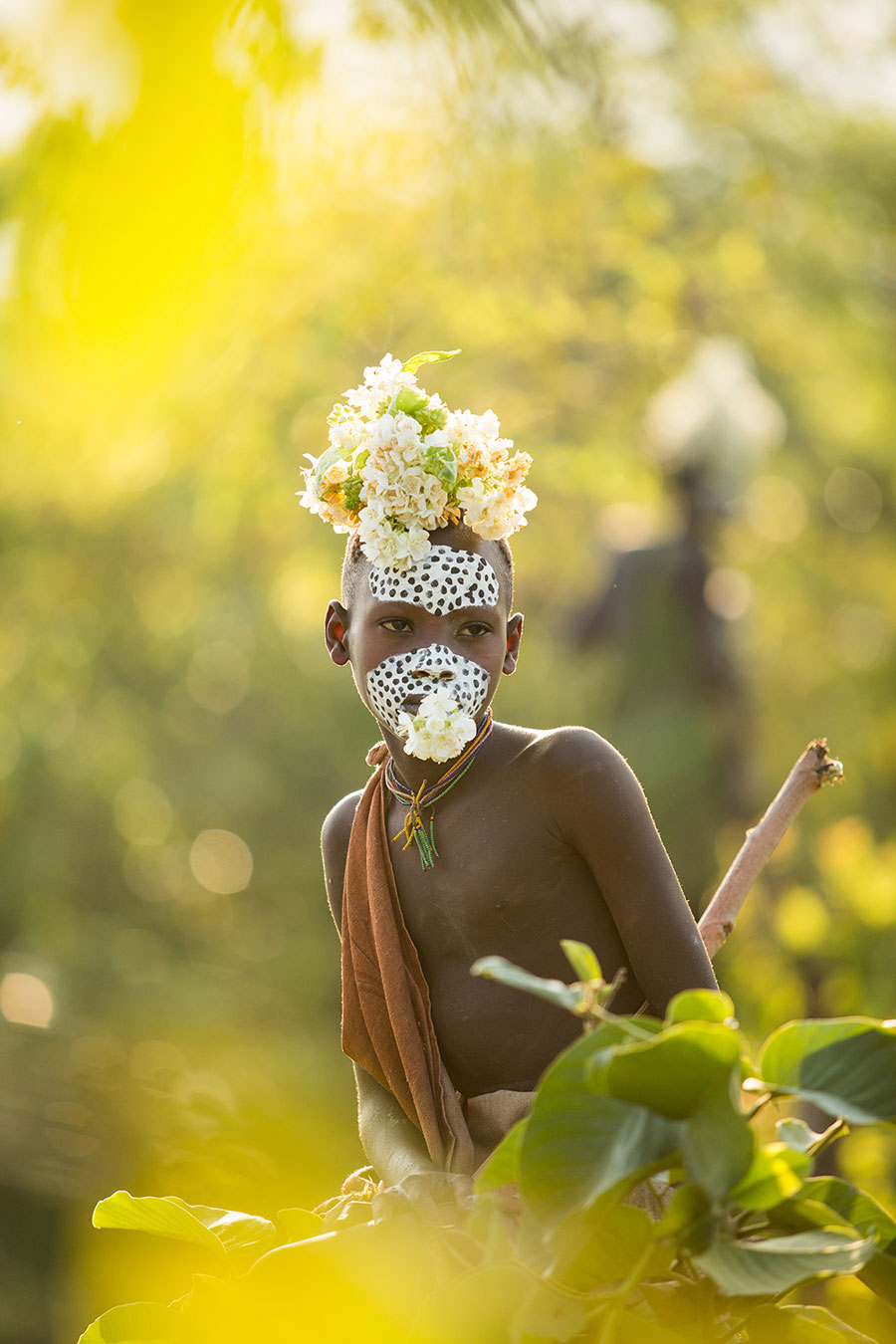
Mago National Park, covering 2,162 square kilometres of savanna, forest, and riverine habitat, is one of Ethiopia’s largest and most biodiverse protected areas. It is also the ancestral homeland of the Mursi tribe, who continue to live, herd cattle, and practise their traditions within the park’s boundaries. This dual identity — wildlife reserve and tribal territory — creates a fascinating dynamic that is unlike almost any other protected area in Africa. Visitors to Mago come for the Mursi, but those who keep their eyes open will also encounter an extraordinary array of birdlife and larger wildlife.
A Birder’s Paradise
The Omo Valley and its surrounding parks are home to more than 300 recorded bird species, making it one of Ethiopia’s top birding destinations. The riverine forests along the Omo River support species like the White-Cheeked Turaco, the striking Abyssinian Roller, and the enormous Abyssinian Ground Hornbill. The open savanna is home to raptors — Martial Eagles, Bateleurs, and Tawny Eagles soar overhead, while Secretary Birds stalk through the grass on their long, stilt-like legs. Along the river itself, kingfishers, herons, and fish eagles are common sights. During the wet season (June–August), migratory species from Europe and the Middle East swell the numbers further.
For dedicated birders, the author recommends combining village visits with early-morning birding sessions. The hour between 6:00 and 7:00 AM — before the day heats up and before most tribal visits begin — is prime birding time. The acacia woodland around Turmi and the riparian zones near Korcho (Karo territory) are particularly productive.
Larger Wildlife: A Landscape of Coexistence
While the Omo Valley’s wildlife is less abundant than Kenya’s Masai Mara or Tanzania’s Serengeti, it is far from negligible. Mago National Park supports populations of buffalo, elephant, giraffe, greater and lesser kudu, gerenuk, and a variety of gazelle species. Hippos are present in the Omo River, and crocodiles bask on the sandbanks. The Dassanech communities near Lake Turkana have a particularly direct relationship with wildlife — the “Dies” sub-group survives by fishing and hunting crocodiles along the delta, maintaining a predator-prey relationship that has existed for centuries.
The Mursi’s relationship with wildlife is more complex. Their cattle herds compete with wild herbivores for grazing land, and lions and leopards occasionally take livestock — creating tension between conservation objectives and pastoral livelihoods. Yet the Mursi also maintain deep respect for certain animals. The guinea fowl, for example, is revered by the Karo and features prominently in their body painting designs, while many tribes regard certain trees, rivers, and natural features as spiritually significant — an indigenous conservation ethic that predates the Western concept of national parks by centuries.
The Omo River Ecosystem
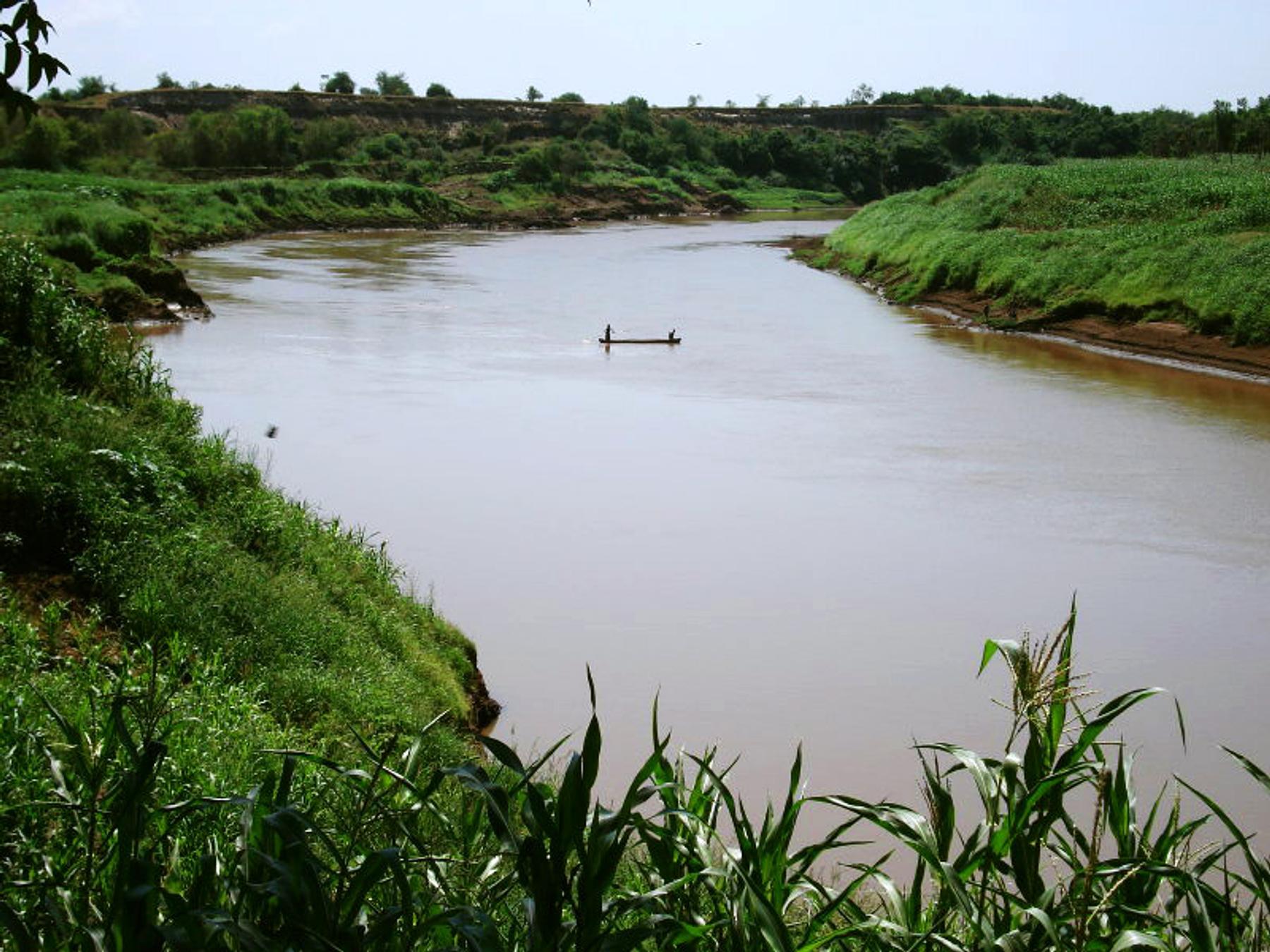
The article devotes particular attention to the Omo River ecosystem and its importance for both human and wildlife communities. The river is the lifeline of the entire valley — providing water for cattle, supporting flood-retreat agriculture, sustaining fish populations, and creating the riparian habitat that hosts much of the region’s biodiversity. The annual flood cycle deposits nutrient-rich silt that fertilises both cultivated plots and natural grasslands, supporting the food chain from insects to eagles.
The article notes with concern the impact of the Gibe III dam on this ecosystem. The dam has reduced the river’s natural flood pulse, threatening both the agricultural practices of the Mursi, Karo, and Dassanech and the ecological processes that sustain the valley’s wildlife. Fish populations are declining, crocodile nesting sites are being disrupted, and the flood-retreat farmland that feeds tens of thousands of people is shrinking. For birders and nature lovers, this environmental context adds urgency to the Omo Valley experience — what you see today may look very different in a decade.
Combining Culture and Nature
The article concludes with a persuasive argument for approaching the Omo Valley as a dual cultural-natural destination. “The tribes did not develop their traditions in a vacuum,” the author writes. “Their body paint comes from the earth. Their food comes from the river. Their spiritual lives are intertwined with the animals and landscapes around them. To understand the people, you must understand the place. And to appreciate the place, you must see how the people have shaped and been shaped by it.” For visitors who take this integrated approach, the Omo Valley reveals itself as something greater than the sum of its parts — a living laboratory of human-nature coexistence that has lessons for us all.
Source: 10,000 Birds