
Ethiopia’s Omo Valley is widely regarded as one of the greatest photography destinations in the world. From the elaborate chalk-and-mineral body paint of the Karo to the ochre-streaked hair ringlets of the Hamer women, from the gravity-defying lip plates of the Mursi to the kaleidoscopic chaos of tribal market days — every frame tells a story of humanity’s astonishing cultural diversity. Here’s a comprehensive guide to photographing the Omo Valley’s tribal communities with skill and sensitivity.
Best Camera Gear to Bring
A versatile mid-range zoom lens (24–70mm f/2.8) will handle most situations — portraits, environmental shots, and village scenes. For stunning bokeh and intimate tribal portraits, a fast prime lens (85mm f/1.8 or 50mm f/1.4) is indispensable. Bring a wide-angle lens (16–35mm) for sweeping landscapes, market panoramas, and interior shots inside dark huts. A telephoto zoom (70–200mm f/2.8) is useful for candid shots from a respectful distance and for capturing details like hand gestures, jewellery, and textures. Don’t forget extra batteries — at least four fully charged spares — and plenty of memory cards. Charging opportunities are limited to lodges and even those may only have electricity for a few hours each evening.
Understanding the Light
The Omo Valley sits close to the equator, meaning the sun rises and sets quickly with relatively short golden-hour windows — typically 30 to 45 minutes. The best portrait light occurs in the first hour after sunrise and the last hour before sunset, when warm, directional light brings out the rich tones of skin, body paint, and ochre decorations. Midday light is harsh and directly overhead, creating unflattering shadows under brows and noses. However, you can use this to your advantage for graphic, high-contrast detail shots — close-ups of lip plates, scarification patterns, beaded jewellery, and hand textures. Seek open shade near huts or trees for midday portraits if needed.
Ethical Photography: The Most Important Skill
Technical skill means nothing without ethical practice. Always ask permission before photographing anyone — through your guide, who can communicate in the local language. Pay photography fees willingly (typically 5–10 birr per person) and don’t bargain over them. These fees are an important income source for families. Show people their images on your camera screen — this simple act of sharing often transforms the dynamic from transactional to personal. Children will crowd around, elders will smile, and you’ll capture far more natural expressions as a result.
Never photograph sacred ceremonies unless your guide explicitly confirms it’s permitted. Avoid photographing people in vulnerable situations — bathing, breastfeeding, or in distress. Remember that you are a guest in someone’s home, not a documentary filmmaker with unlimited access. The best photographs in the Omo Valley always come from genuine human connection, not from technical superiority.
Market Days: Street Photography at Its Best
The weekly tribal markets are a street photographer’s dream. The Turmi Monday market, Key Afer Thursday market, and Dimeka Saturday market each offer incredible opportunities for action photography, candid portraits, and storytelling sequences. Arrive early to photograph the set-up — traders spreading goods on the ground, first customers arriving, the quiet anticipation before the crowds descend. By mid-morning, the market is a swirling mass of colour, noise, and movement. Use a fast shutter speed (1/500s or higher) to freeze action, and don’t be afraid to shoot at higher ISOs for the flexibility. Look for storytelling moments: a handshake over a goat sale, a mother braiding her daughter’s hair, a group of friends laughing over honey beer. These narrative images are far more powerful than posed portraits.
Portrait Techniques That Work
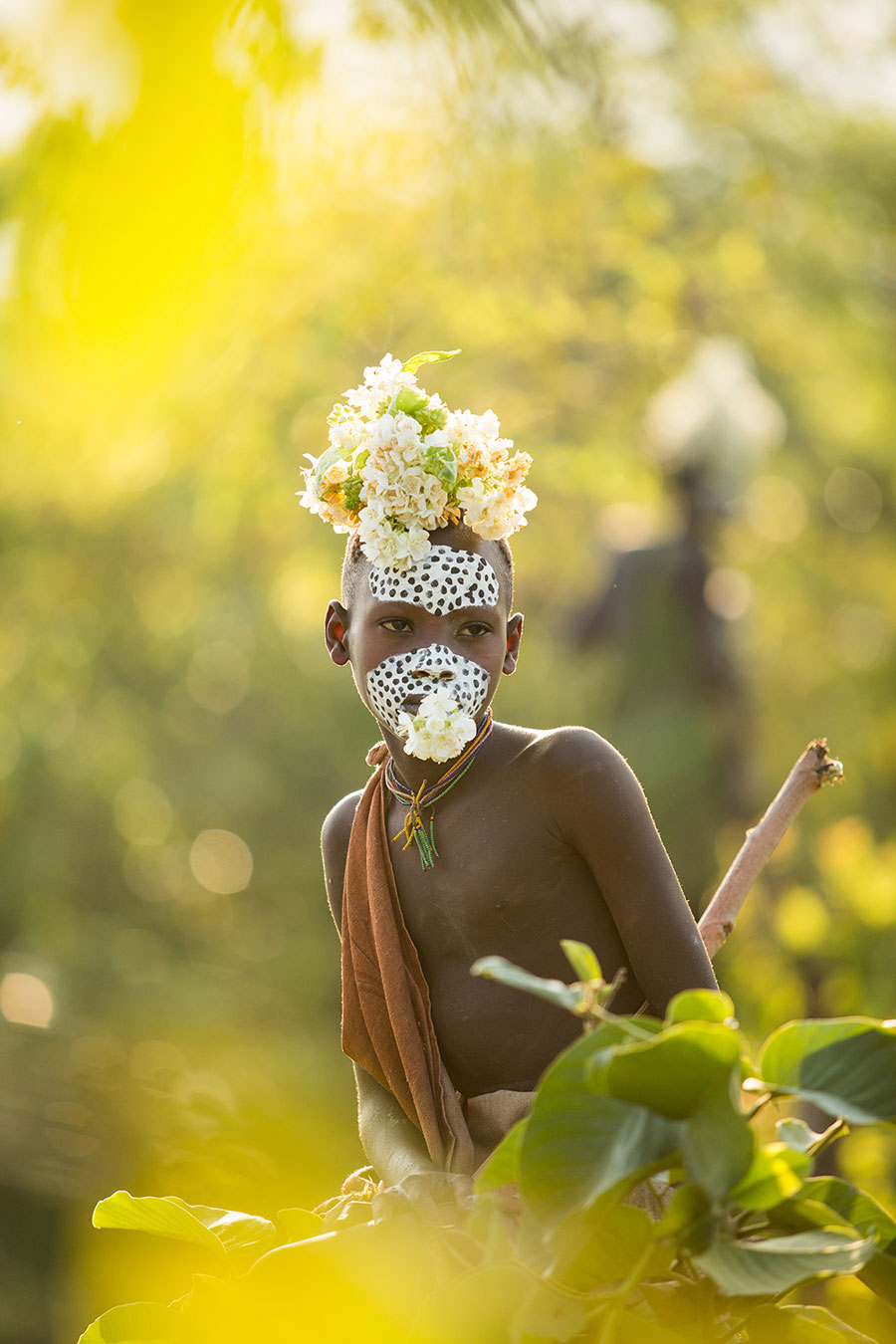
For Mursi lip plate portraits, shoot at eye level or slightly below to convey dignity and strength. Use a wide aperture (f/2.8 or wider) to isolate your subject from the busy background of a village. For Karo body painting, experiment with multiple perspectives — tight crops of individual patterns, full-body shots against the ochre cliffs, and creative use of negative space with the sky. For Hamer women, focus on the interplay of textures: the smooth ochre ringlets, the rough iron torques, the glossy beads, and the matte goatskin skirts. Backlighting can create beautiful rim light around hair and jewellery.
Protecting Your Gear
Dust is the number-one enemy of camera equipment in the Omo Valley. Every road is unpaved, and the fine ochre dust penetrates everything. Use a high-quality camera bag with good seals, and keep your gear in sealed zip-lock bags when not in use. Clean your sensor and lens contacts every evening. A rocket blower is more effective than canned air (which isn’t available locally). Lens cloths should be replaced regularly — once they’re full of grit, they scratch more than they clean. A rain cover is essential during the shoulder season (April–May) when sudden showers can strike. And finally, insure your gear before you go — the Omo Valley’s rough roads have rattled loose many a lens mount.