Professional traveller and photographer Maverickbird’s comprehensive guide to the Omo Valley stands out for its blend of high-quality photography, deep cultural research, and practical travel wisdom. The post goes far beyond the typical travel blog — it explores the significance of hairstyles, skin markings, and jewellery as markers of identity and status among the valley’s tribes, providing readers with the kind of contextual understanding that transforms a visual experience into an intellectual one.
The Language of Hair
One of the most fascinating aspects of Maverickbird’s guide is its detailed exploration of how hairstyling communicates identity across different tribes. Among the Hamer, women’s hair is a visual autobiography. Married Hamer women fix their hair in short, dense ringlets coloured with a mixture of butterfat and red ochre — the distinctive “amar” style that gives the tribe its name. Unmarried girls wear their hair in tight braids without ochre. First wives wear a heavy iron torque (binyere) around their necks, immediately identifying their senior status in the household. Hamer men who have successfully completed the bull-jumping ceremony shave their heads and apply a clay cap decorated with ostrich feathers — a proud public declaration of their adult status.
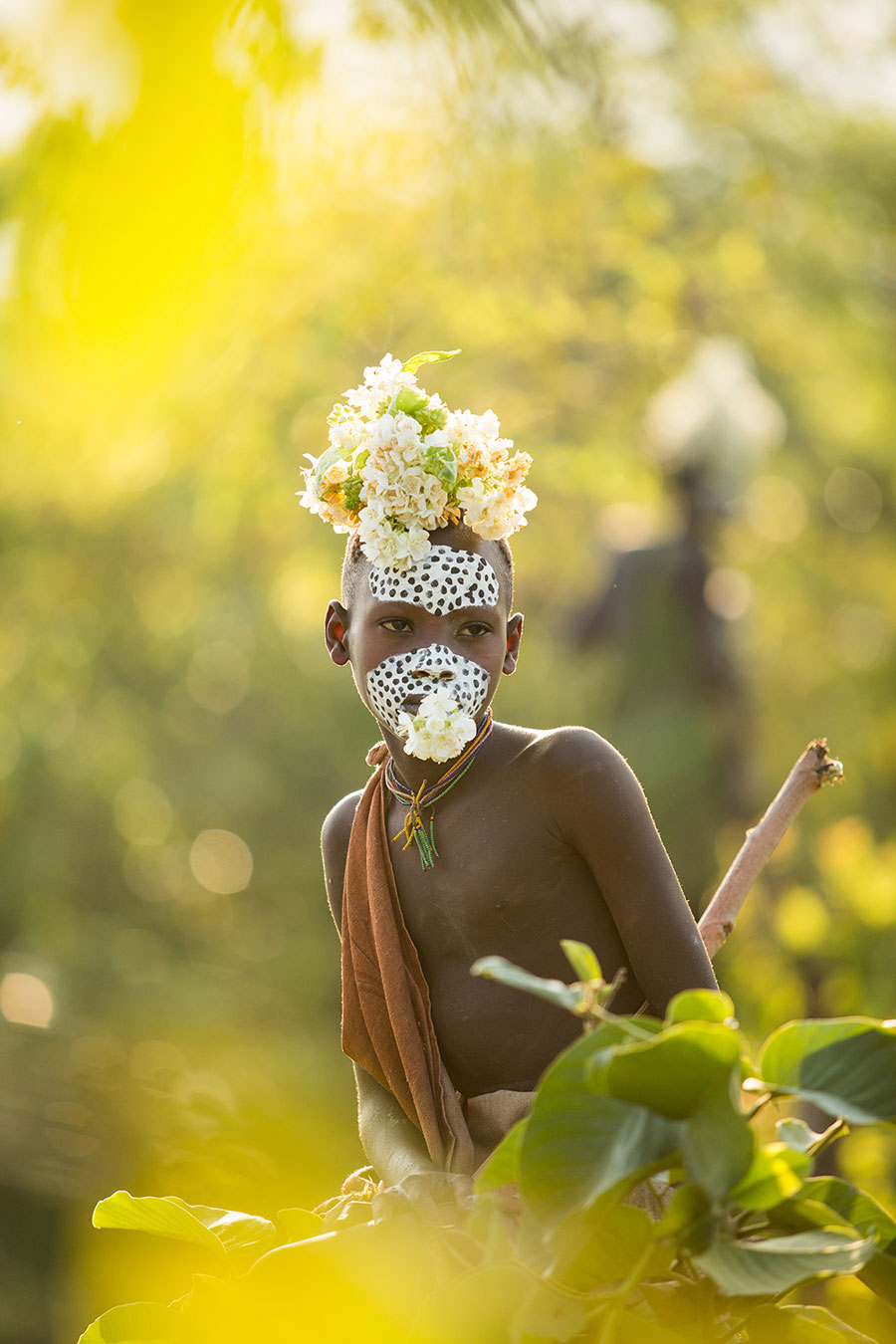
The Banna men take hairdressing to another level, sculpting elaborate clay caps decorated with flowers, feathers, beads, and small metal ornaments. Each element carries meaning — the number of feathers may indicate hunting achievements, while specific bead colours communicate clan affiliation. Among the Karo, women shave patterns into their hair as a form of artistic expression, while men may wear clay buns (similar to the Banna) adorned with guinea fowl feathers.
Scarification and Skin Marking
Maverickbird provides one of the most thorough explanations available of scarification practices across the Omo Valley tribes. For the Mursi, scarification is primarily aesthetic — women create geometric patterns on their shoulders, arms, and torsos by cutting the skin with a thorn or blade and rubbing ash into the wound to produce a raised scar. The patterns are personal and artistic, with each woman designing her own. For Mursi men, chest scars tell a different story — each mark represents a significant achievement, typically an enemy killed in battle. A man’s scarred chest is effectively a resume of his courage and prowess.
The Karo practise similar scarification, though their chest markings for men specifically indicate kills of enemies or dangerous animals (such as buffalo or crocodile). Women’s scarification patterns are more decorative, often covering the abdomen and lower back. Among the Surma, scarification reaches its most elaborate expression, with some women bearing patterns that cover nearly their entire torsos — years of progressive cutting that creates intricate, three-dimensional landscapes of raised skin.
Jewellery as Social Code
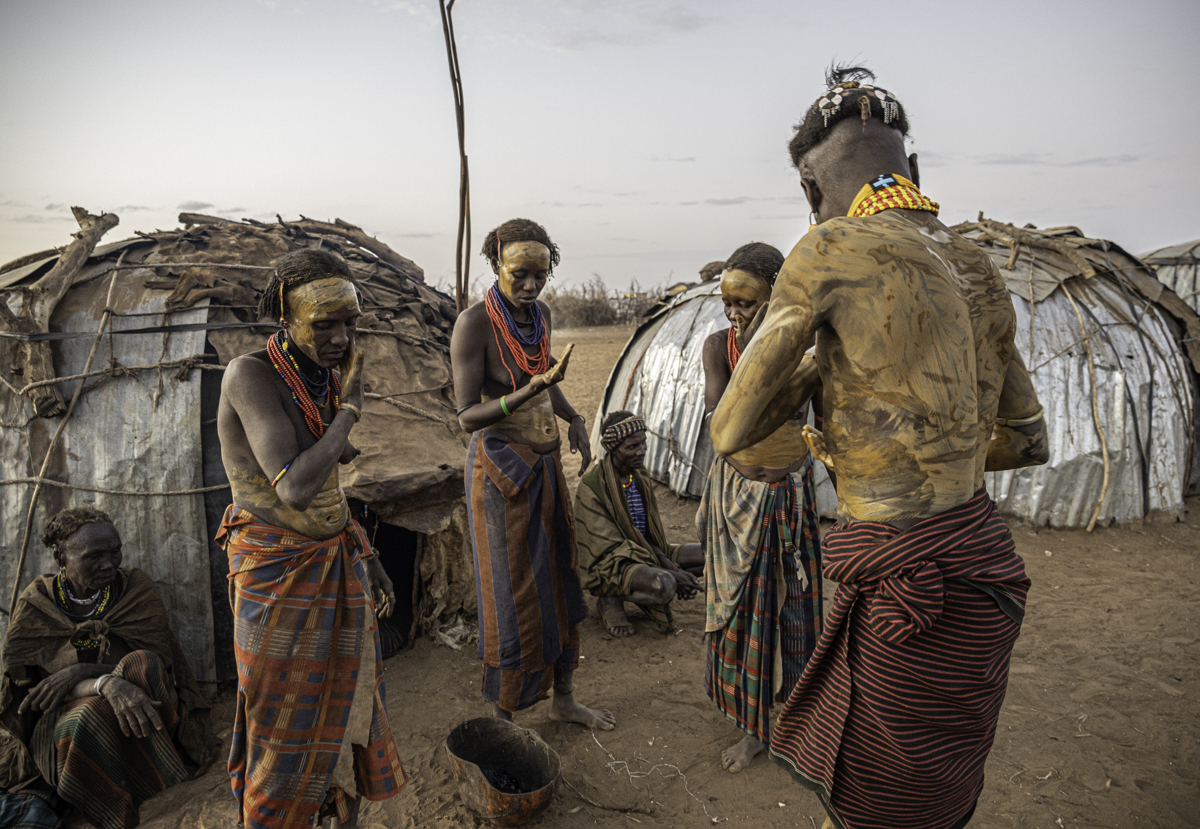
The guide devotes considerable attention to the role of jewellery in Omo Valley societies. Among the Hamer, beaded jewellery is not decorative — it is a complex social code. Specific colours, patterns, and combinations indicate a woman’s marital status, the number of children she has borne, her clan affiliation, and her family’s wealth. The binyere (iron torque) worn by first wives is perhaps the most significant single piece of jewellery in the valley — heavy, uncomfortable, and impossible to remove without tools, it signals a woman’s elevated social position. Among the Dassanech, jewellery has taken a creative modern turn — women and children fashion headdresses from bottle caps, old watch parts, SIM cards, buttons, and any other small objects they can find, creating extraordinary works of recycled art.
Photography Tips from the Field
Maverickbird offers invaluable photography guidance gained from extended time in the valley. For portraits, he recommends shooting during the golden hour (first and last hour of daylight) and using a wide aperture to isolate subjects from busy backgrounds. For body painting and scarification, get close — these are textures that reward macro-style shooting. At markets, use a fast shutter speed and continuous autofocus to capture the energy and movement. And always, always prioritise the human connection over the technical shot. The best portraits in the Omo Valley are the ones where the subject feels comfortable, respected, and genuinely engaged with the photographer — and that only happens when you put the camera down first and pick it up second.
Source: Maverickbird